



 Pre-Winter Roof Maintenance: Why October Is the Ideal Month
October is the best time to prepare your roof for winter because temperatures are still mild enough for sealants, felts and adhesives to cure properly, and most leaves have fallen or are falling, so gutters can be cleared once and stay clear. Leave it until December, and you’re dealing with frost, shorter days and wet surfaces that make repairs slower, less reliable and harder to book.
Last October kept our fitting teams busy across North London and Hertfordshire. In three weeks, we re-flaunched chimney stacks in Hornsey, fitted a new UPVC roofline across a block of flats in Barnet, and rebuilt a dormer roof in Cheshunt with a pooling water problem. Most of the winter leaks we fix could have been spotted in October.
Why does the weather in October matter for roof repairs?
Many roofing materials need dry conditions and moderate temperatures to bond and set correctly. Flat roof systems, lead work sealants and gutter joint sealants generally perform best when applied above roughly 5°C on a dry surface. Once overnight frosts become regular, those repairs either have to wait or risk failing early.
October typically gives you:
- Daytime temperatures that still suit most sealing and waterproofing work
- More dry spells than November and December
- Enough daylight for a proper visual inspection
- A chance to fix problems before the first heavy frost
When water gets into a crack in a tile, mortar joint or flashing and then freezes, it expands and widens the gap. One winter of freeze and thaw can turn a hairline issue into a leak.
What should a pre-winter roof check include?
Here’s the checklist we work through on October roof inspections. Some of it you can check yourself from the ground; anything at height is best left to a professional.
1. Gutters and downpipes
Blocked gutters are the most common cause of winter water damage we see. Leaves, moss and debris hold water against your fascias, and when that water freezes it can pull gutters away from their brackets. Clear gutters fully, flush the downpipes, and check that joints aren’t dripping.
2. Tiles and slates
Look for slipped, cracked or missing tiles. Even one gap lets wind get underneath neighbouring tiles during a storm, which is how a single missing tile becomes a section of damaged roof.
3. Flashing and leadwork
Flashing seals the joins around chimneys, walls, skylights and valleys. Check for lifting edges, cracks or gaps in the sealant.
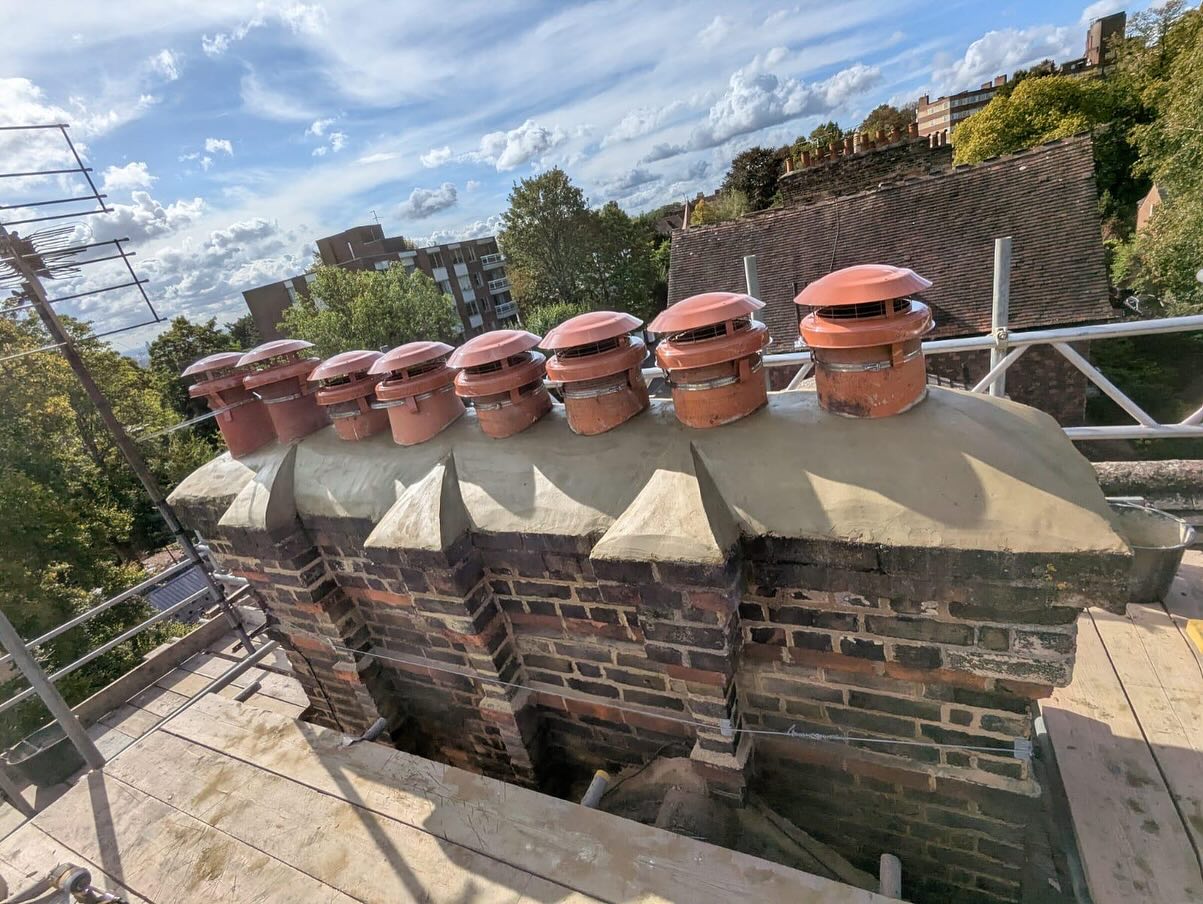
In Hornsey last October we re-flaunched two chimney stacks and fitted new soakers and lead flashings around both stacks and the adjoining parapet walls. In Barnet the same month, we replaced the flashing kits on two Velux windows. Chimneys and roof windows are two of the most common places for flashing to fail, so they’re worth checking first.
4. Ridge and verge
Crumbling mortar on ridge tiles or verges is common on older roofs. Loose ridge tiles are a genuine risk in winter winds, so it’s worth getting them repointed or replaced with a dry fix system before the weather turns.
5. Flat roofs
Check for blisters, splits or areas where the membrane has lifted. Flat roofs are especially vulnerable to freeze and thaw, and October is usually the last reliable month for patch repairs.
Standing water is the sign to act on. On a dormer in Cheshunt, water was pooling on the roof, so we laid new OSB boarding with timber furrings to create a proper fall and finished it with a three-layer SBS high-performance felt system. Rain now runs off the roof instead of sitting on it.
6. Fascias, soffits and bargeboards
Your roofline protects the ends of your rafters. Cracked, rotten or loose timber boards let in moisture and pests. UPVC fascias and soffits are low maintenance, but they still need a check for secure fixings and a clean to prevent algae build-up.
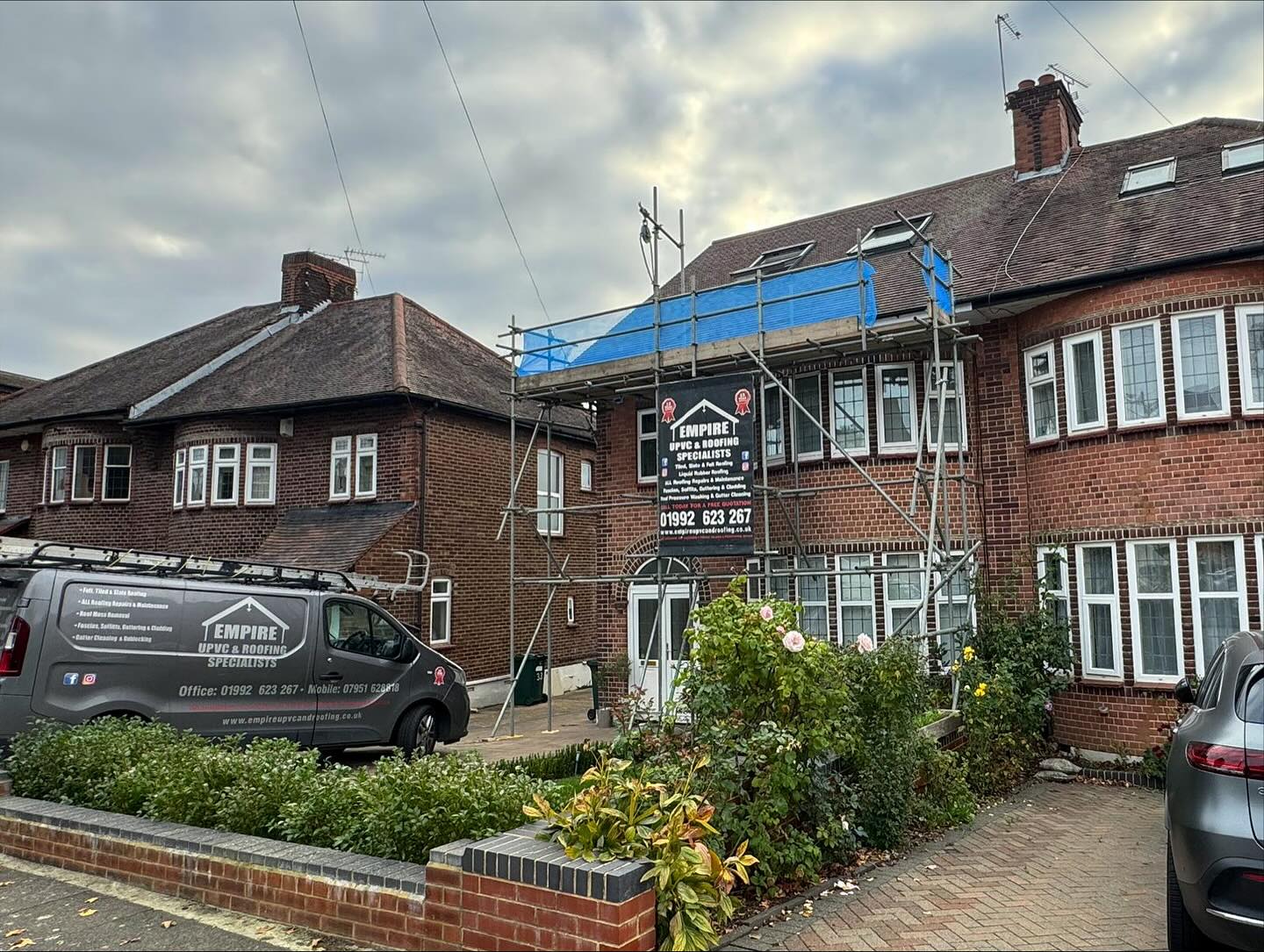
This applies to larger buildings too. Last October we replaced the entire UPVC roofline on a block of flats in Barnet for a block management company.
7. Moss and debris
Heavy moss holds moisture against tiles and can lift them over time. It also washes into gutters and causes blockages. Removing it before winter reduces both problems.
8. Ventilation and chimney cowls
Lofts are more prone to condensation in winter, when warm air from the house meets a cold roof space. On a Barnet job last October, we fitted roof vents to add ventilation to the roof space and vented cowls to the chimney pots, which help keep rain and debris out of the flue.
9. Loft and ceilings
From inside, look for damp patches, water staining, daylight through the roof or damp insulation. These are often the first signs of a problem that isn’t visible from outside.
Can I do pre-winter roof maintenance myself?
You can safely do some of it. Checking ceilings and the loft, looking at the roof through binoculars from the ground, and clearing low-level gutters from a well-secured ladder are all reasonable for most homeowners.
Anything that involves walking on the roof, working above first-floor height or repairing flashing, flat roofs or ridge tiles should be done by a trained roofer with the right access equipment. Roof work is one of the most common causes of serious falls at home, and it isn’t worth the risk to save the cost of an inspection.
What happens if I skip pre-winter roof maintenance?
The most common winter problems we’re called out for are:
- Leaks from blocked gutters overflowing into walls and soffits
- Tiles lifted or lost in storms because of an existing weak point
- Flat roof leaks where a small split has widened through frost
- Damp and mould inside from water slowly getting in through failed flashing
Winter is also the busiest period for emergency repairs, so response times across the industry are longer. It’s a small job now and a much bigger one in January.
How long does a professional roof inspection take?
A standard inspection on a typical house usually takes around an hour, depending on the roof’s size, access and condition. We’ll tell you what needs doing now and what can wait.
Book your October roof check with Empire UPVC & Roofing Specialists
We work across North London and Hertfordshire, including Hornsey, Barnet, St Albans, Welwyn Garden City and Cheshunt. Several of our October jobs last year were for customers we’d worked for before, including a new tiled front roof in St Albans, a Marley Mendip roof with new lead bay window roofs in Welwyn Garden City, and the Cheshunt dormer.
If you’d like us to take a look before the frosts start, give us a call. For a free quotation, contact us here.
Frequently asked questions
When should I get my roof checked before winter?
October is ideal in the UK. It’s late enough that most leaves have fallen, but still mild and dry enough for repairs to set properly.
How often should gutters be cleaned?
At least once a year, ideally in late autumn. Homes surrounded by trees may need clearing twice, in spring and autumn.
Can roof repairs be done in winter?
Emergency repairs can be carried out in winter, but many sealing and flat roof repairs are less reliable in cold or wet conditions. Planned repairs are best done before regular frosts start.
What are the signs my roof needs attention before winter?
Slipped or missing tiles, sagging or overflowing gutters, damp patches on ceilings, crumbling ridge mortar and lifted flashing are all worth getting checked.
Do UPVC fascias and soffits need maintenance?
Very little, but they should be checked for secure fixings and cleaned occasionally to prevent algae and keep gutters draining correctly.
Which areas does Empire UPVC & Roofing Specialists cover?
We work across North London and Hertfordshire, including Hornsey, Haringey, Barnet, St Albans, Welwyn Garden City and Cheshunt.